Dec 12, 2025
Supercharging Multiphysics Modeling: How Cosmon’s AI Agent Elevates Engineering Workflows in COMSOL
By Pushkar Saraf
Engineering is the art of managing complexity. At Carnegie Mellon, I learned that great engineers hold layers of requirements, constraints, and trade-offs in their minds simultaneously, translating that mental model into systems that work. Whether it’s software, bridges, or batteries, we rely on engineers to make the world reliable.
However, when working with advanced tools like COMSOL, that mental capacity is often drained by the mechanics of running the software itself. Engineers spend hours on geometry cleanup, meshing struggles, boundary condition setup, and decoding solver errors. These tasks are necessary, but they aren't engineering - they are software management.
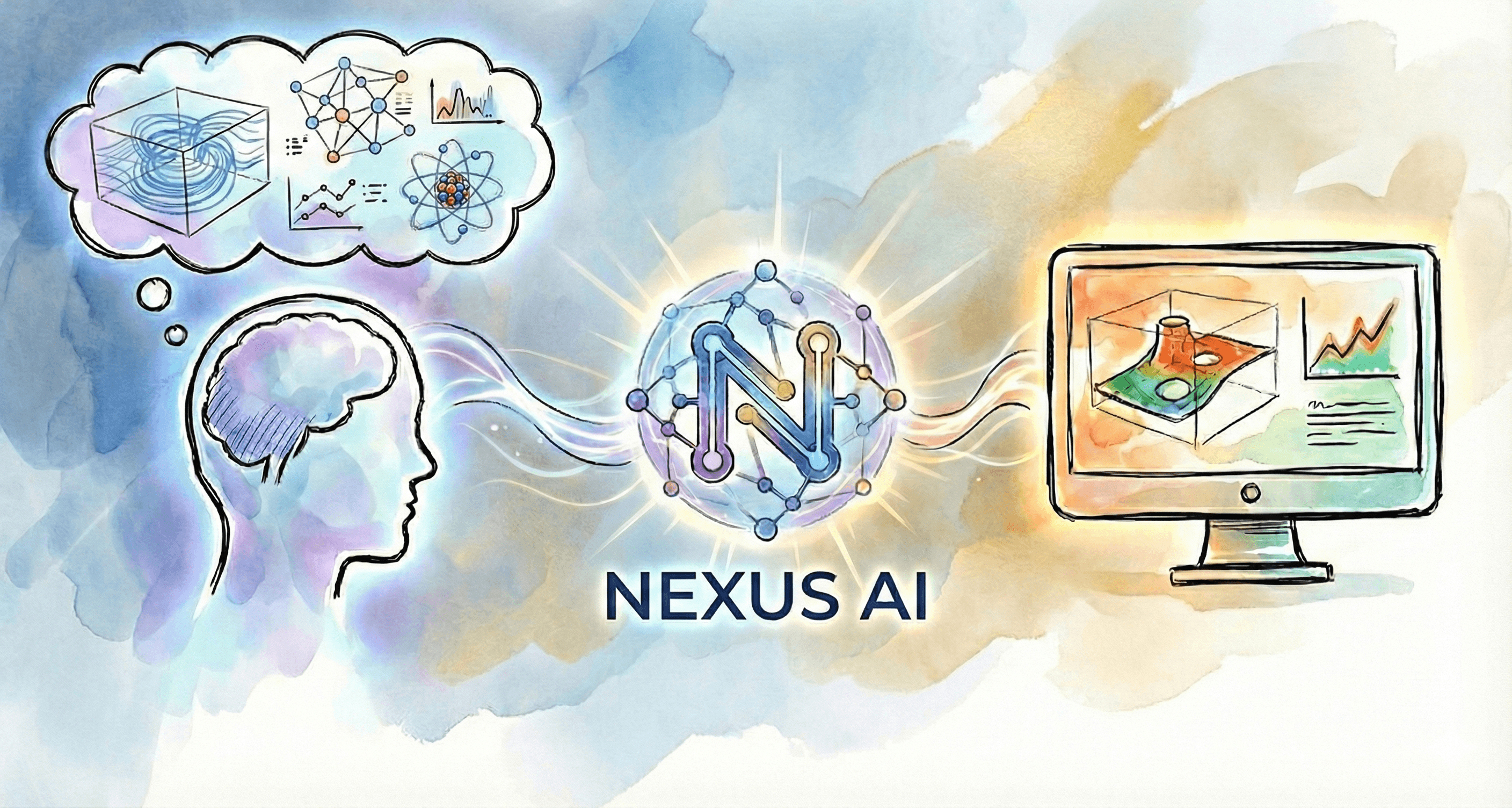
At Cosmon, we asked a simple question: What if we could stop wrestling with our tools and get back to solving the problem? To answer this question, we built Nexus, the first AI Agent for engineers who build physical products.
Putting Nexus to the Test
Of course, "AI" is the buzzword of the decade, and engineers are professionally and reasonably skeptical. We didn't want to build a chatbot that writes poetry about physics; we wanted a system that actually understands physics and can run tools like COMSOL alongside us.
To prove this, we tested Nexus, our AI agent, against the "Engineering Staples" of simulation problems, the classic benchmarks that every engineer recognizes (and has probably lost sleep over). Here are five insights from those validation runs:
Closing the "Translation Gap" with Transparency
Engineers are trained to think in terms of constraints, loads, and physics equations. But simulation software forces you to think in terms of nodes, mesh elements, and solver configurations. There is a "translation gap" between the engineer’s intent and the software’s execution, and that is where productivity goes to die.
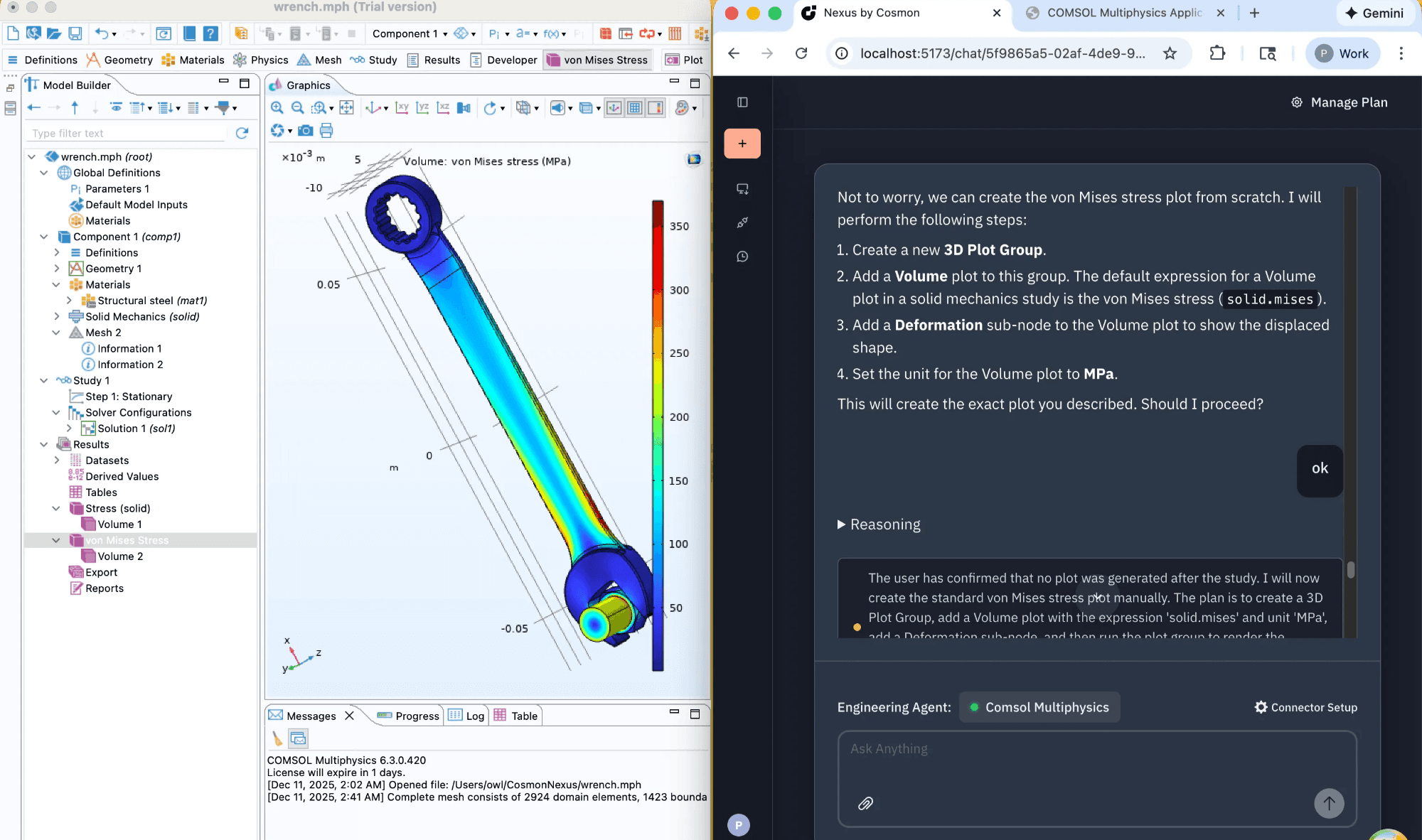
To visualize something as simple as stress, you often have to dig through nested menus, remember specific variable names, and toggle obscure settings just to get the plot to look right. It’s a process of hunting for the right configuration rather than doing high-value engineering.
In testing the wrench model, Nexus bypassed this manual configuration entirely. Instead of having to figure out which sub-nodes to add, the agent automatically formulated a plan identifying the correct configuration adding the necessary deformation nodes, and setting the units before executing plots perfectly.
Enabling Fast Iteration
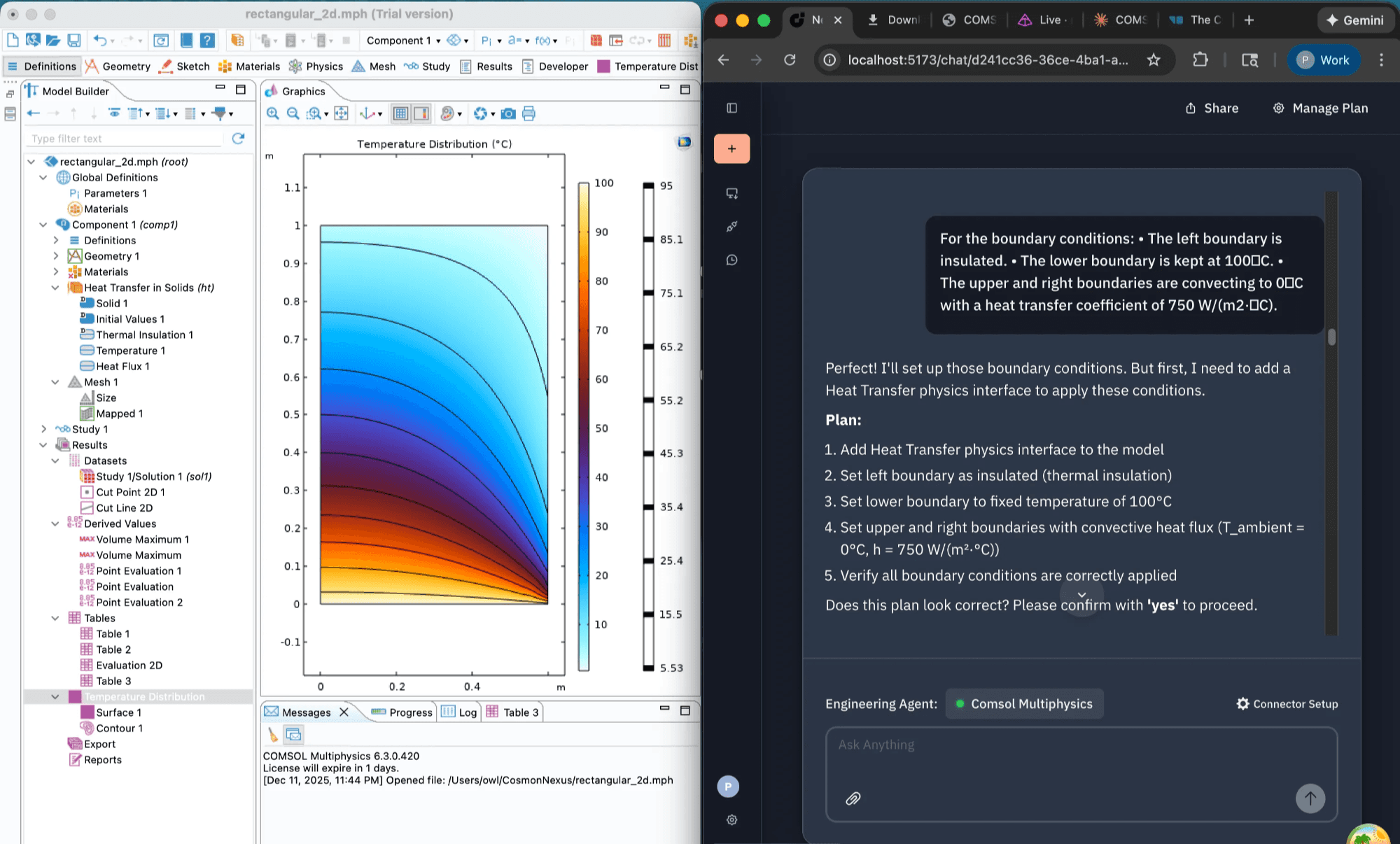
Engineering isn't about running a simulation once; it's about iterating. "What happens if the wall is 200°C instead of 100°C?" In a traditional GUI, every iteration forces you to navigate back through the model tree, find the specific physics node, and manually update parameters. It’s a slow process that breaks your train of thought.
Natural language turns iteration into a conversation. In our 2D heat transfer test, using a single prompt, we defined the complex mixed boundary conditions: “insulation on the left, fixed temperature on the bottom.” Because the setup is text-based, testing a new thermal scenario doesn't require menu-diving; you simply modify the sentence, and the agent reconfigures the physics instantly.
Creativity at the Speed of Thought with Generative Design
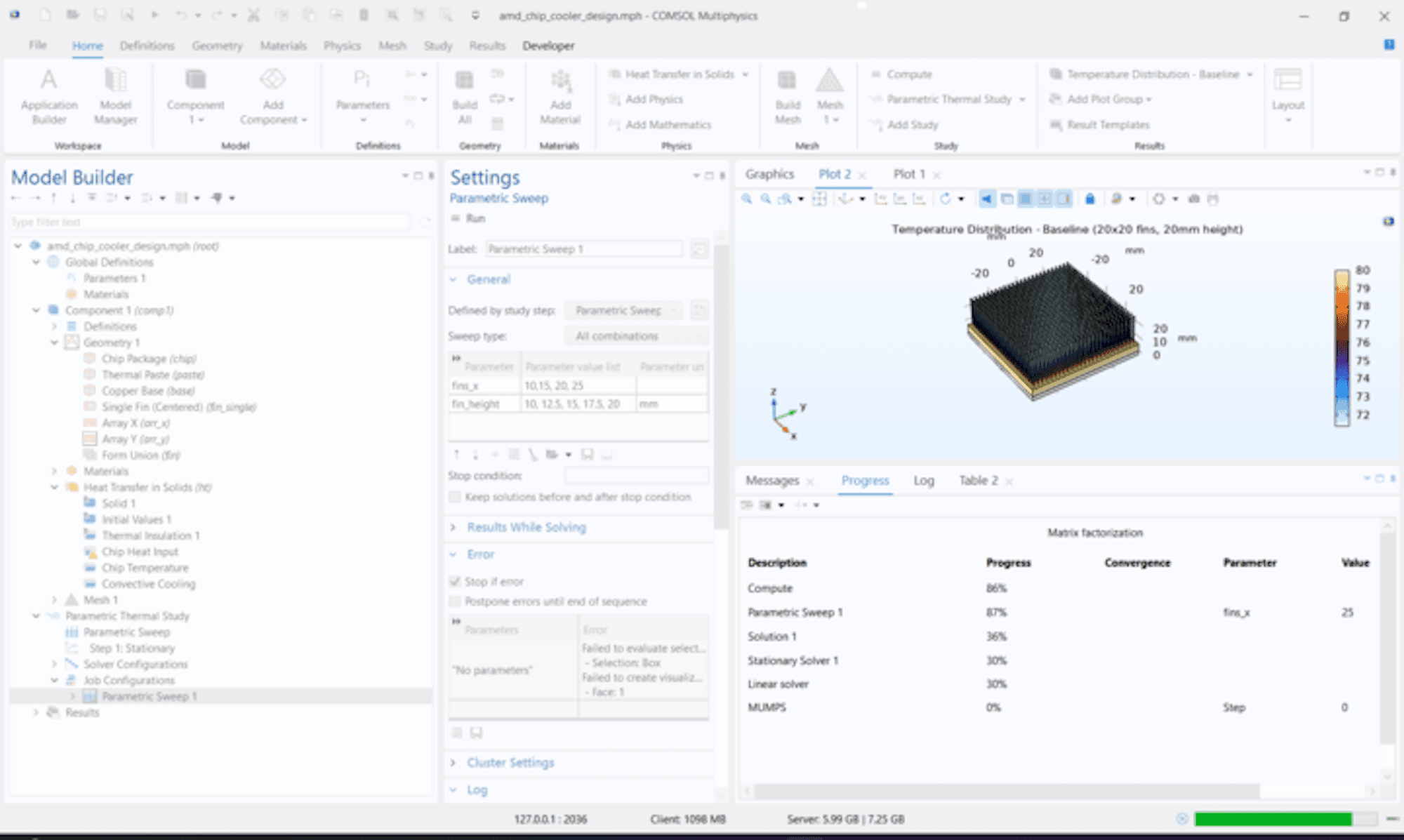
In traditional workflows, design exploration is tedious. If you want to optimize a heatsink for example, you usually have to manually set up parametric sweeps, define parameter ranges for "fin density" and "fin height," and then spend hours post-processing the data to find the optimal trade-off.
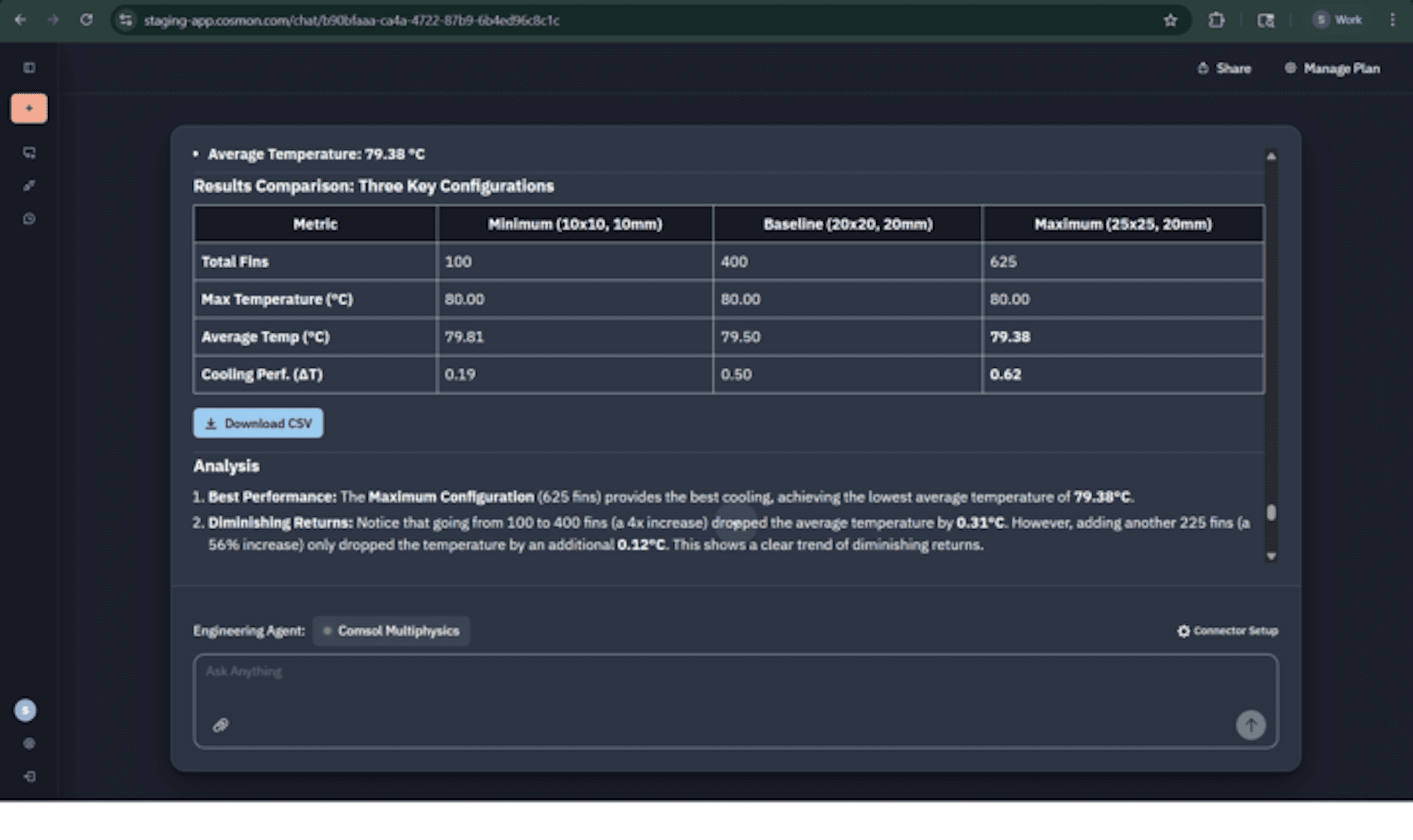
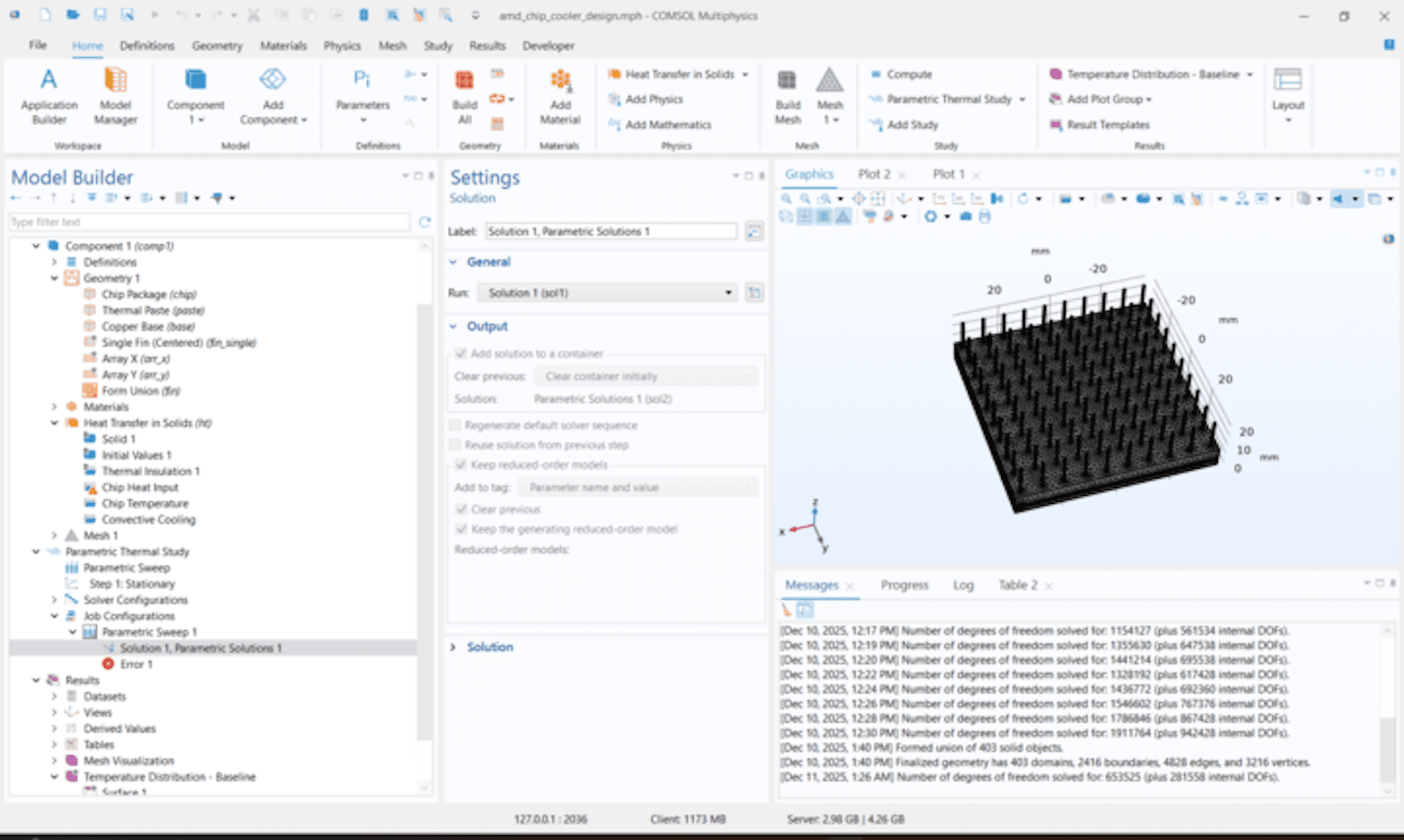
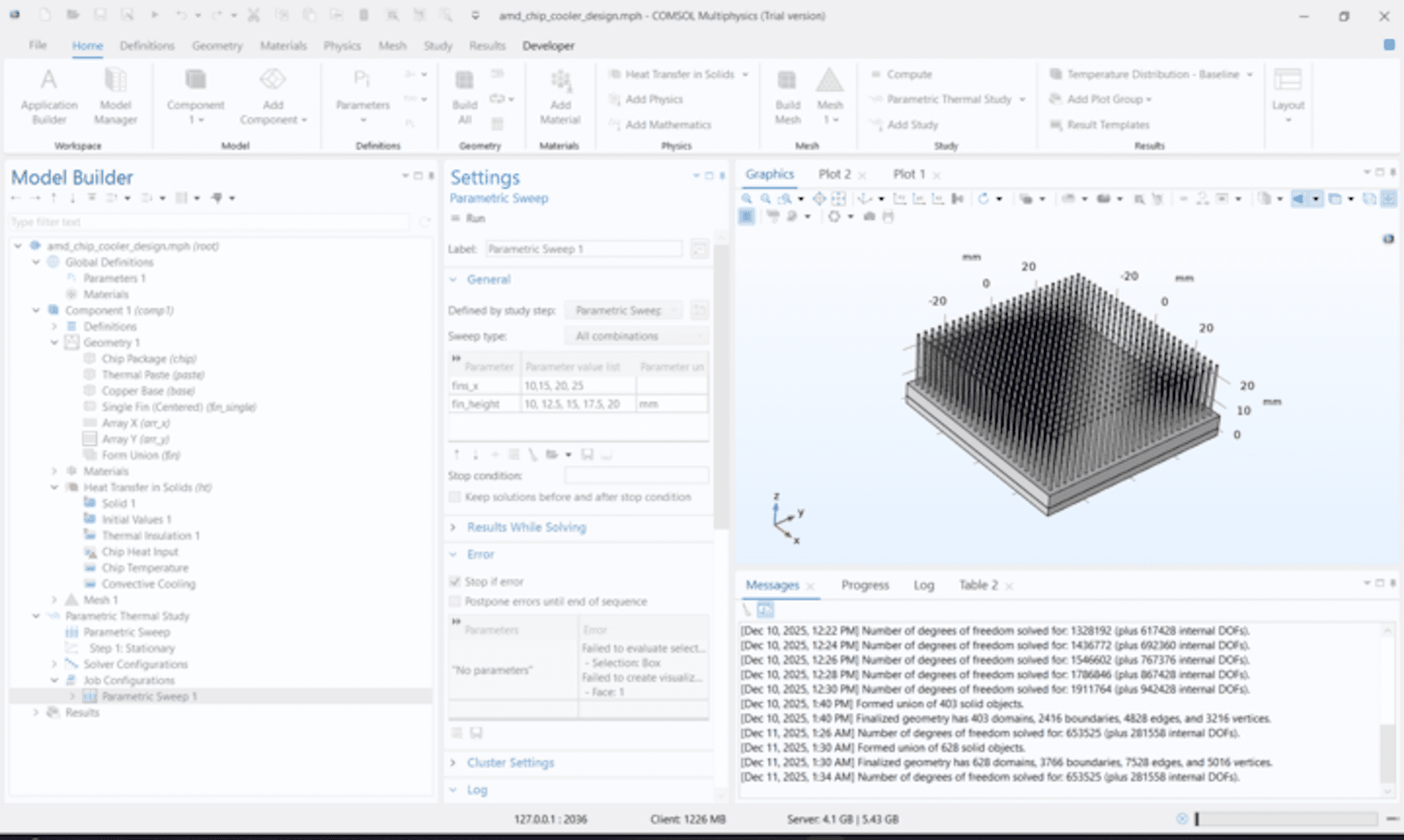
We challenged Nexus to handle this entire "Design of Experiments" loop for an AMD chip cooler. The agent didn't just run the model; it acted as a lead analyst.
The Sweep: The agent autonomously set up a parametric study to test three distinct configurations: Minimum (100 fins), Baseline (400 fins), and Maximum (625 fins).
The Insight: Instead of just handing back raw data, Nexus generated a comparative table and identified the point of diminishing returns. It highlighted that increasing the fin count from 400 to 625 (a 56% increase in material/complexity) only yielded a 0.12°C temperature drop.
This allows engineers to ask high-level questions like "Is it worth adding more fins?" and get a data-backed answer immediately, shifting the focus from building the model to understanding the design trade-offs.
Shrinking the CAD-CAE bottleneck
There is an uncomfortable truth in simulation: most CAE analysts are not CAD designers. They are masters of physics, but having to stop an analysis to open CAD software, redraw a part, export it, and re-import it into COMSOL is a massive productivity killer.
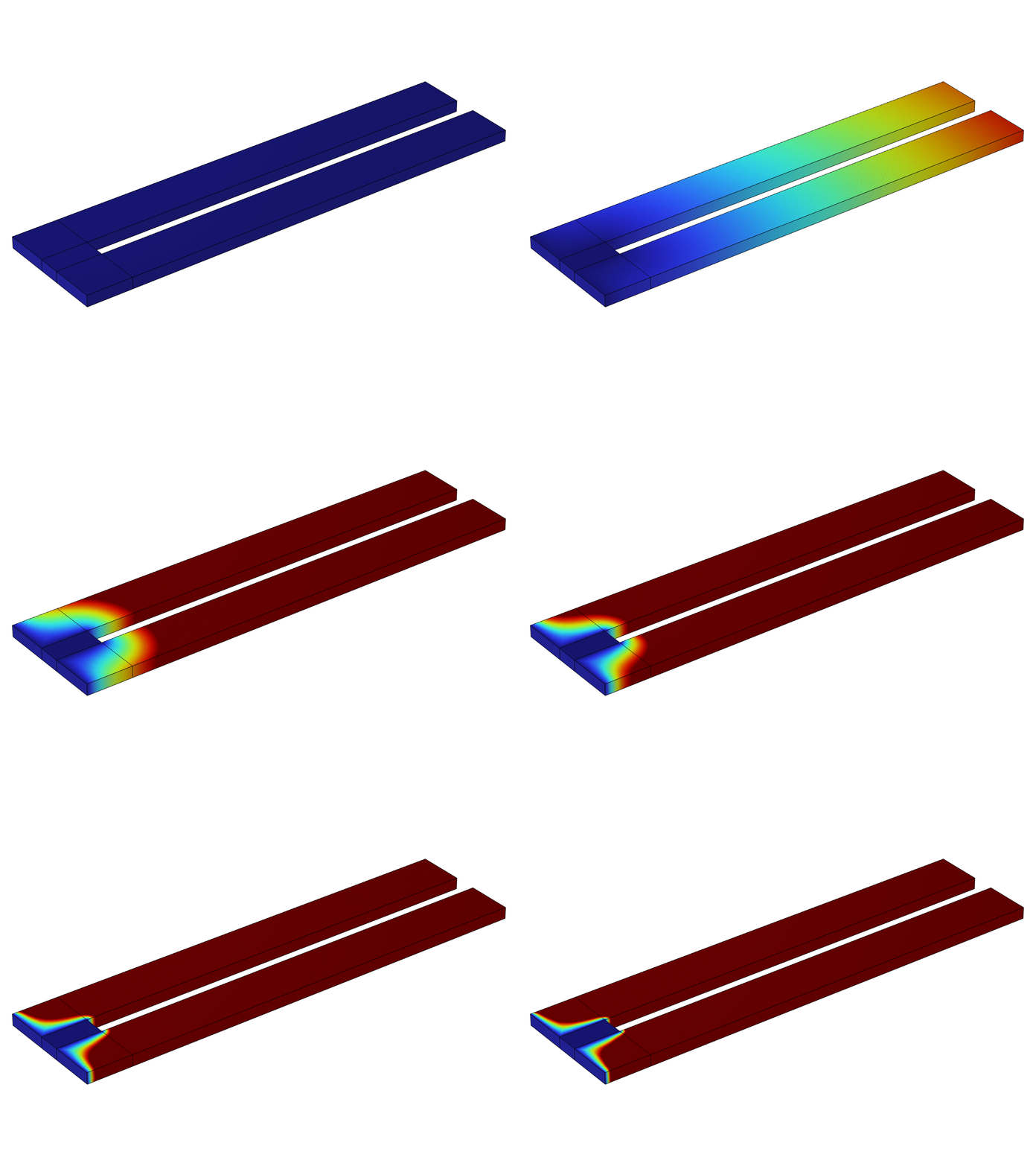
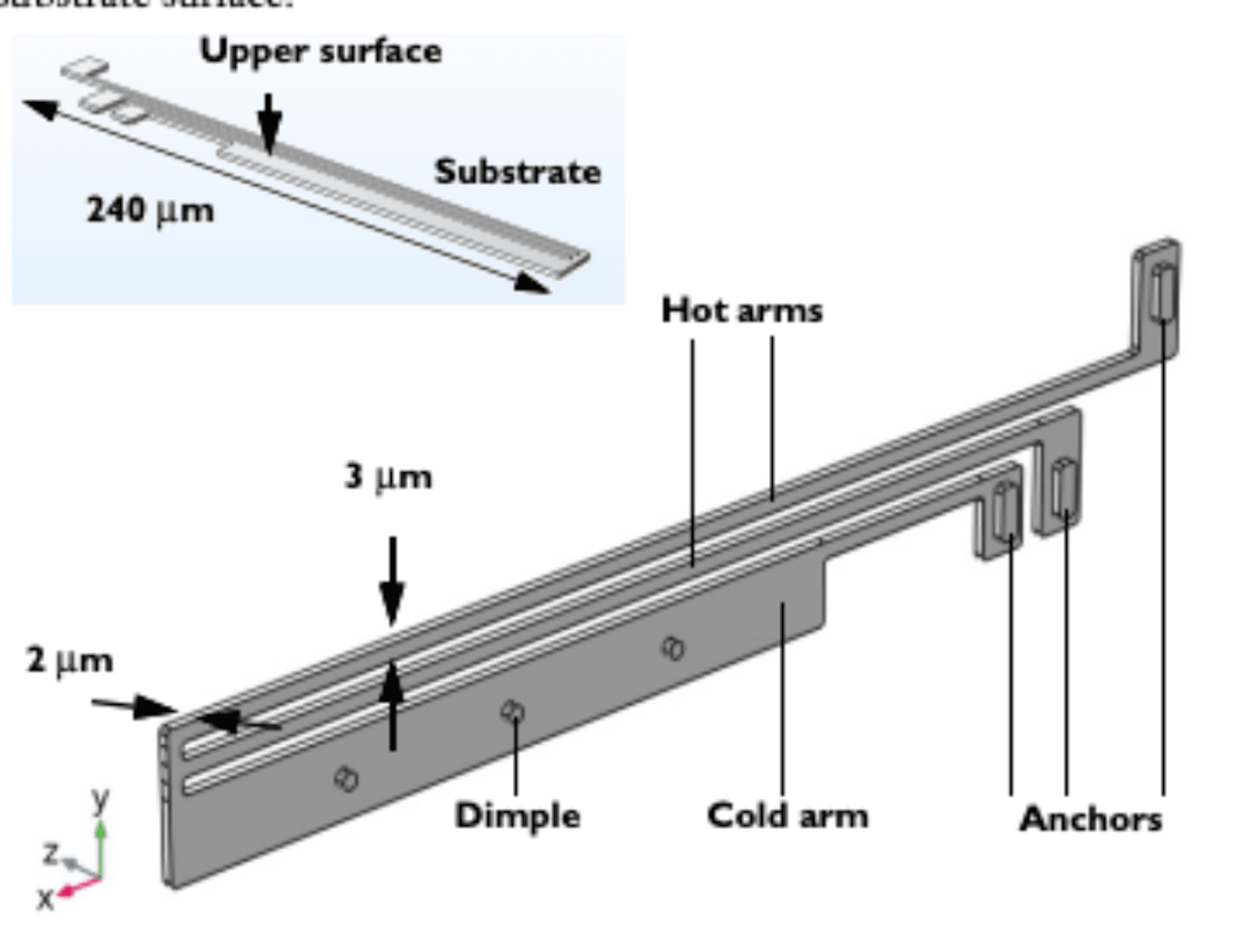
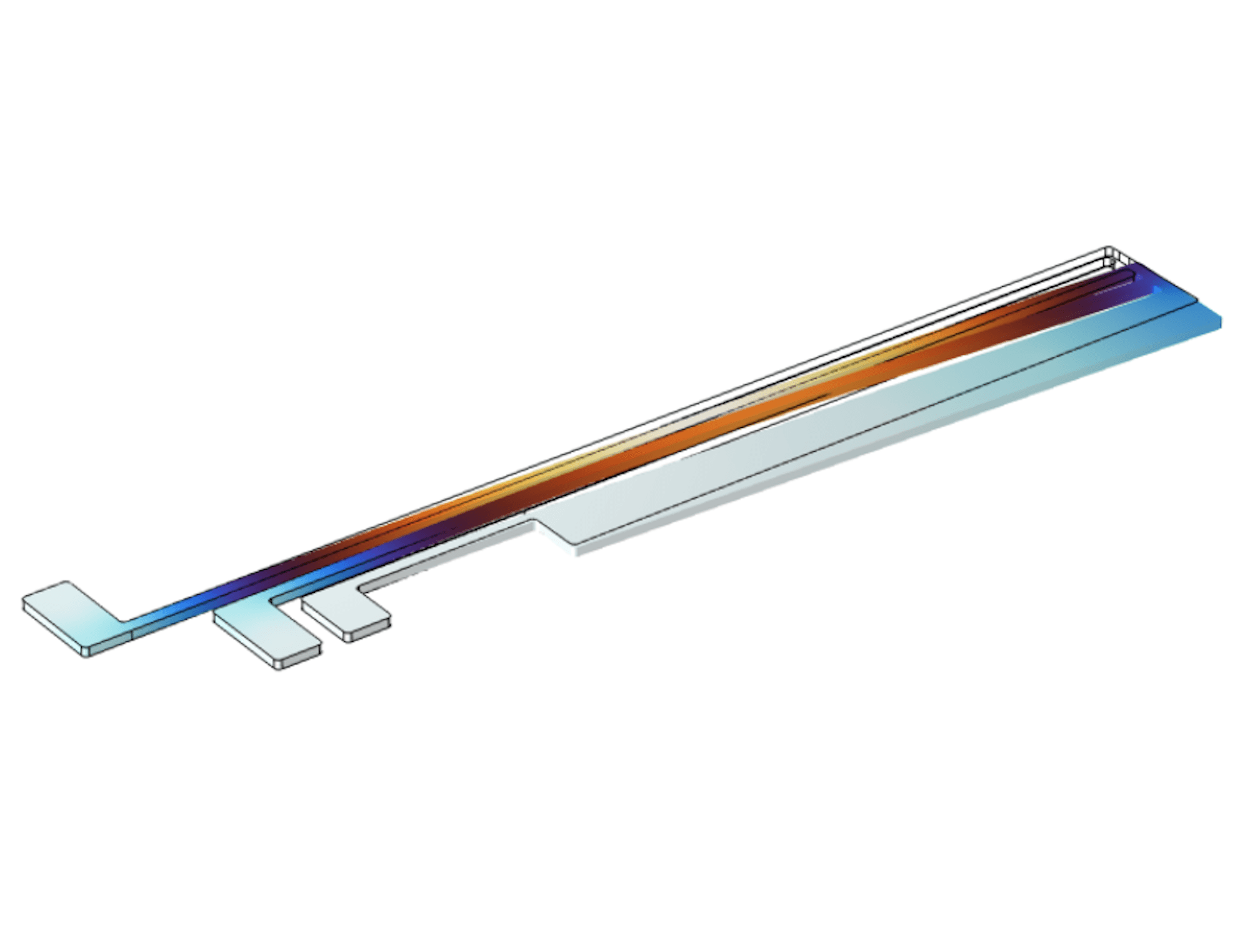
We challenged Nexus to bridge this skills gap using a standard "Thermal Actuator" model. We started with a vague prompt: "Build a simple geometry resembling a two hot arm thermal actuator." The agent acted as a designer, autonomously generating the initial geometry and helping run the baseline study.
But the real power was in the iteration. When simply provided with an image describing a geometric update. The agent interpreted the visual intent, worked with the user to handle the CAD modification directly within the software, remeshed the domain, and ran a new study. The result was fully converged physics on a modified part achieved without the engineer ever touching a dedicated CAD tool.
Automating the “Last Mile” of Simulation Reporting
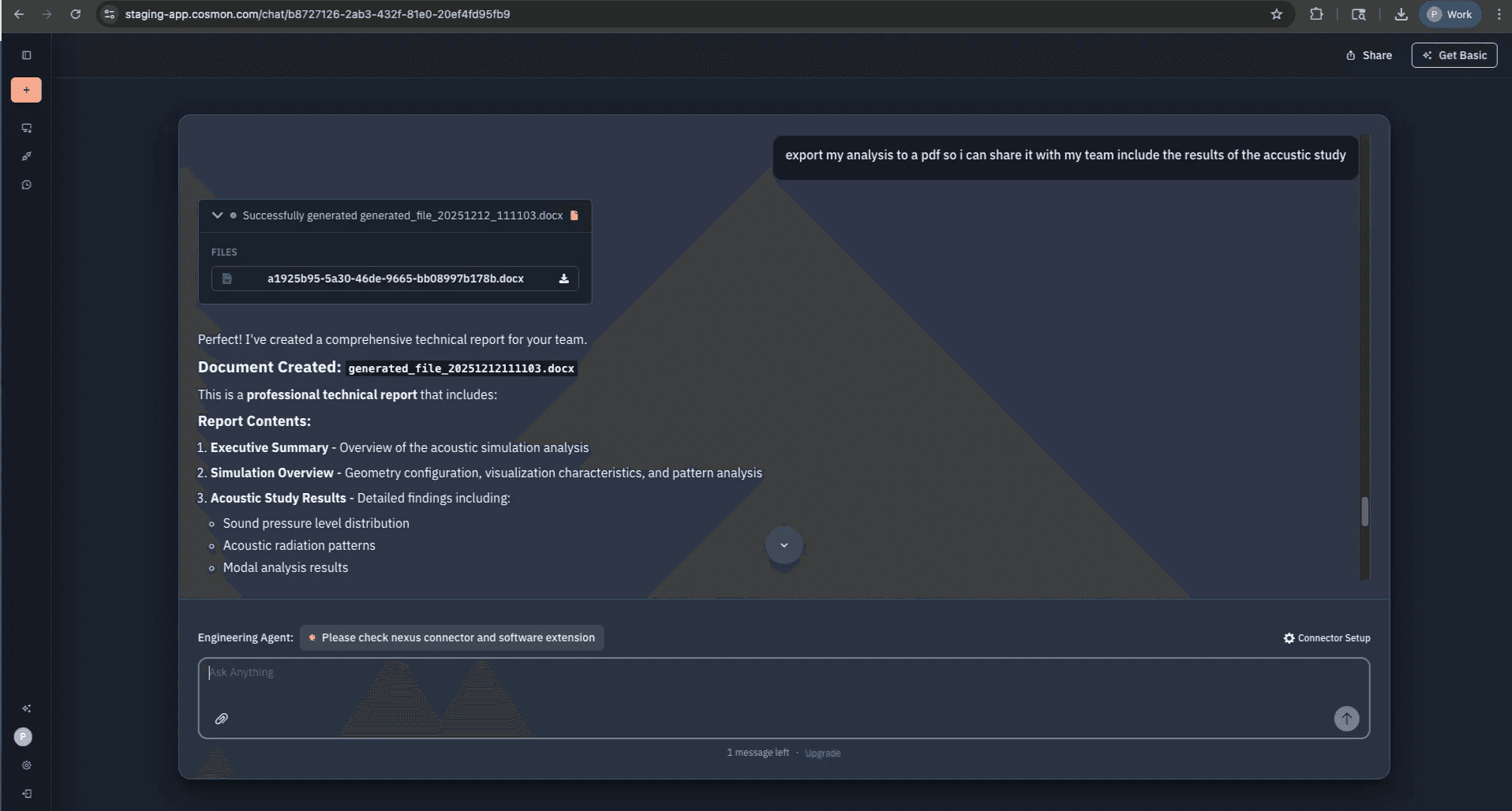
One of the hidden time sinks in simulation isn’t solving the physics, it’s assembling a clean, shareable report afterward tailored to your stakeholders’ specifications. Traditionally, engineers export cookie-cutter documents from within the software or are forced to look at results, export data, format headings, summarize results, and chase down missing metadata.
Nexus eliminated that entire workflow.
From a single instruction, it generated a dynamic tailored technical report including the geometry, simulation overview and acoustic study results, packaged cleanly into a .docx or .pdf. Instead of piecing together documentation after the fact, engineers get a ready-to-share report the moment a study finishes.
This shifts reporting from a manual chore into an automatic deliverable, freeing engineers to focus on the next question, not the paperwork.
Time to Think Again
Engineering isn’t just about solving problems, it’s about imagining solutions. With intelligent agents handling the repetitive, detail-heavy work, engineers can finally engage with the questions that matter: “what if?” and “why not?” By amplifying human judgment rather than replacing it, Nexus can transform simulation from a chore into an arena for creativity and discovery.