Jan 1, 2026
Closing the Loop: How AI Agents Are Reshaping Automotive Workflows in Multibody Simulation, Suspension Design, and K&C
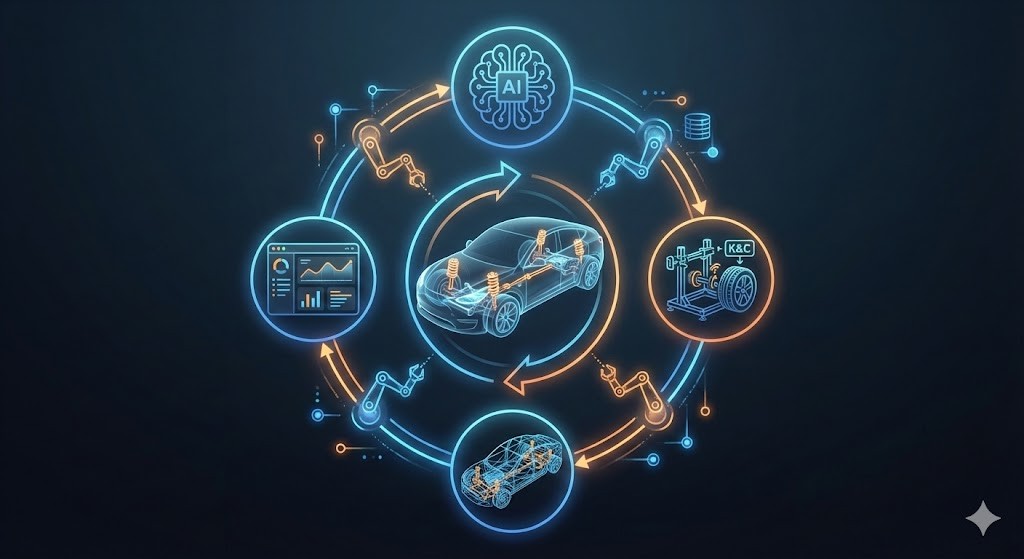
The Disconnected Reality of Vehicle Dynamics
In modern automotive engineering, the tools have never been more powerful, yet the workflows remain surprisingly brittle.
Vehicle dynamics engineers and chassis designers are working at the cutting edge of physics, managing the complexities of heavy EV platforms, active suspension systems, and increasingly tight packaging constraints. We have high-fidelity Multibody Simulation (MBS) solvers like MSC Adams and Simpack. We have parametric CAD environments like CATIA and NX. We have sophisticated Kinematics & Compliance (K&C) virtual test rigs.
But these tools often exist in silos. The "connective tissue" between them is usually a human engineer manually moving data, writing one-off scripts, or staring at spreadsheets.
At Cosmon, we believe the next leap in productivity won’t come from a faster solver, but from a smarter, better, AI-enabled workflow. We are building AI agents specifically designed to bridge the gap between CAD, MBS, and Post-Processing.
Here, we’ll detail is how AI is moving from a buzzword to a practical tool for suspension design and analysis.
The Bottleneck: The "High-Fidelity" Tax
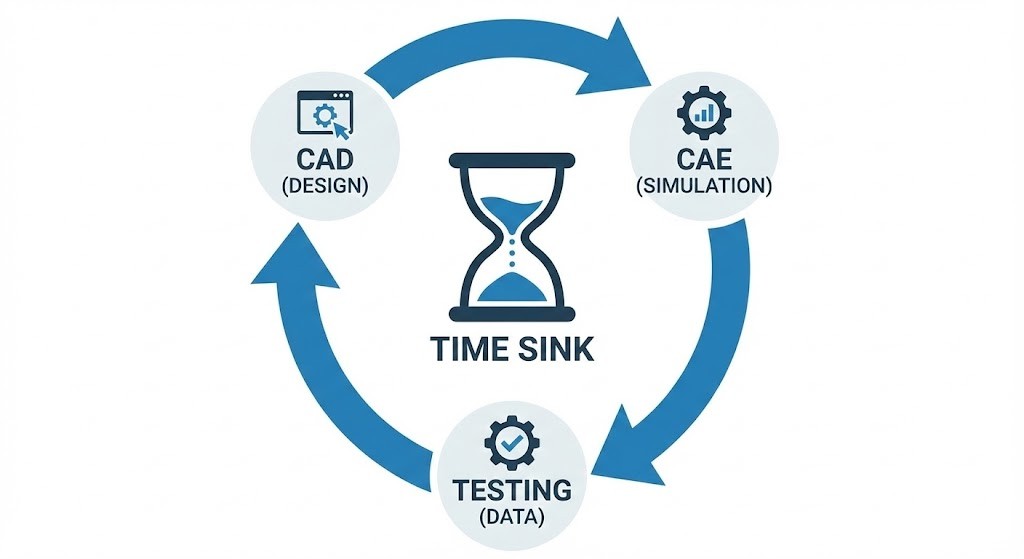
Every suspension engineer knows the pain of the iterative loop. Moving a suspension hardpoint by 5mm in CAD isn't just a geometry change; it triggers a cascade of manual tasks.
MBS Setup Drudgery: You have to update the simulation model topology, verify joint constraints, and re-parameterize bushings.
K&C Data Overload: A standard K&C analysis generates a large amount of data—steer compliance, camber change, bump steer, anti-dive geometries. Manually plotting these against target envelopes to find outliers is a massive time sink.
The Correlation Gap: Bridging the gap between physical test rig data and virtual simulation results often requires "parameter tuning" based on intuition rather than rapid, data-driven comparison.
This friction slows down design exploration. Engineers spend less time engineering and more time managing files and formatting data.
The Solution: AI Agents with CAx Tool Agency
We are not talking about generative AI that hallucinates a suspension geometry. We are talking about AI Agents with tool agency.
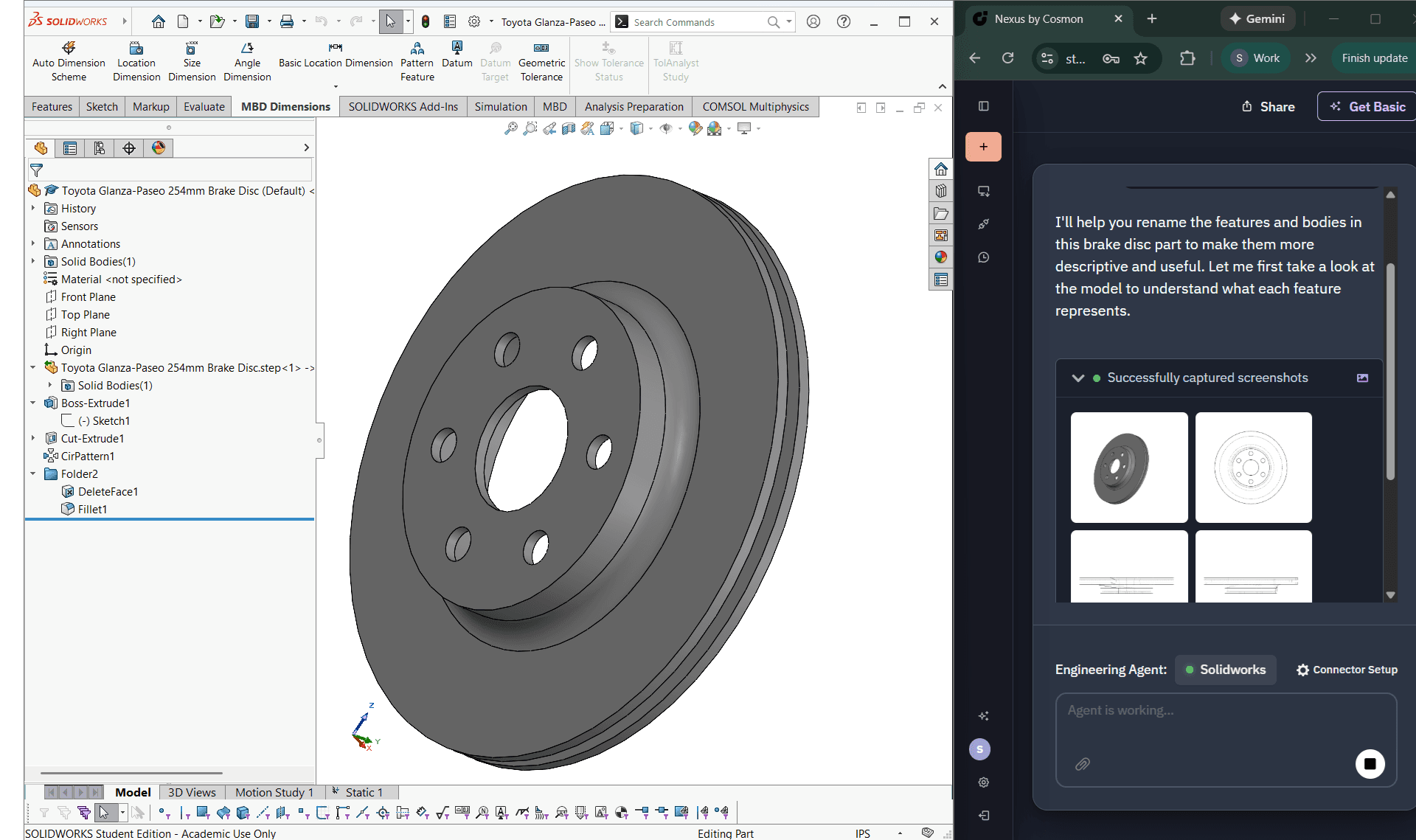
These are specialized Large Language Models (LLMs) trained on engineering context and connected via APIs to your existing CAx toolchain (CAD software, CAE solvers, Python data processing libraries). They act as an intelligent orchestration layer that can execute tasks, parse data, and answer complex technical questions.
1. Accelerating Suspension Design & MBS Simulation Setup
Instead of manually keying in hardpoint coordinates or sifting through supplier PDFs for bushing stiffness values, an AI agent can assist the setup process.
The agent can parse a BOM export or coordinate list from CAD, identify changes in suspension geometry, and automatically script the update to the MBS model using the solver’s native scripting language (e.g., Python or cmd).
The Workflow:
Engineer: "I’ve updated the front lower control arm hardpoints in the CAD master. Update the Simpack model and check if the new tie-rod angle creates bump steer issues exceeding our 'Sport' target."
AI Agent: Connects to the CAD API to retrieve new coordinates, modifies the subsystem file, runs a preliminary kinematic check, and reports back the specific gradient values.
2. Automated K&C Post-Processing
This is perhaps the highest value area for immediate productivity gain. K&C analysis involves looking at hundreds of plots to ensure compliance with vehicle attributes.
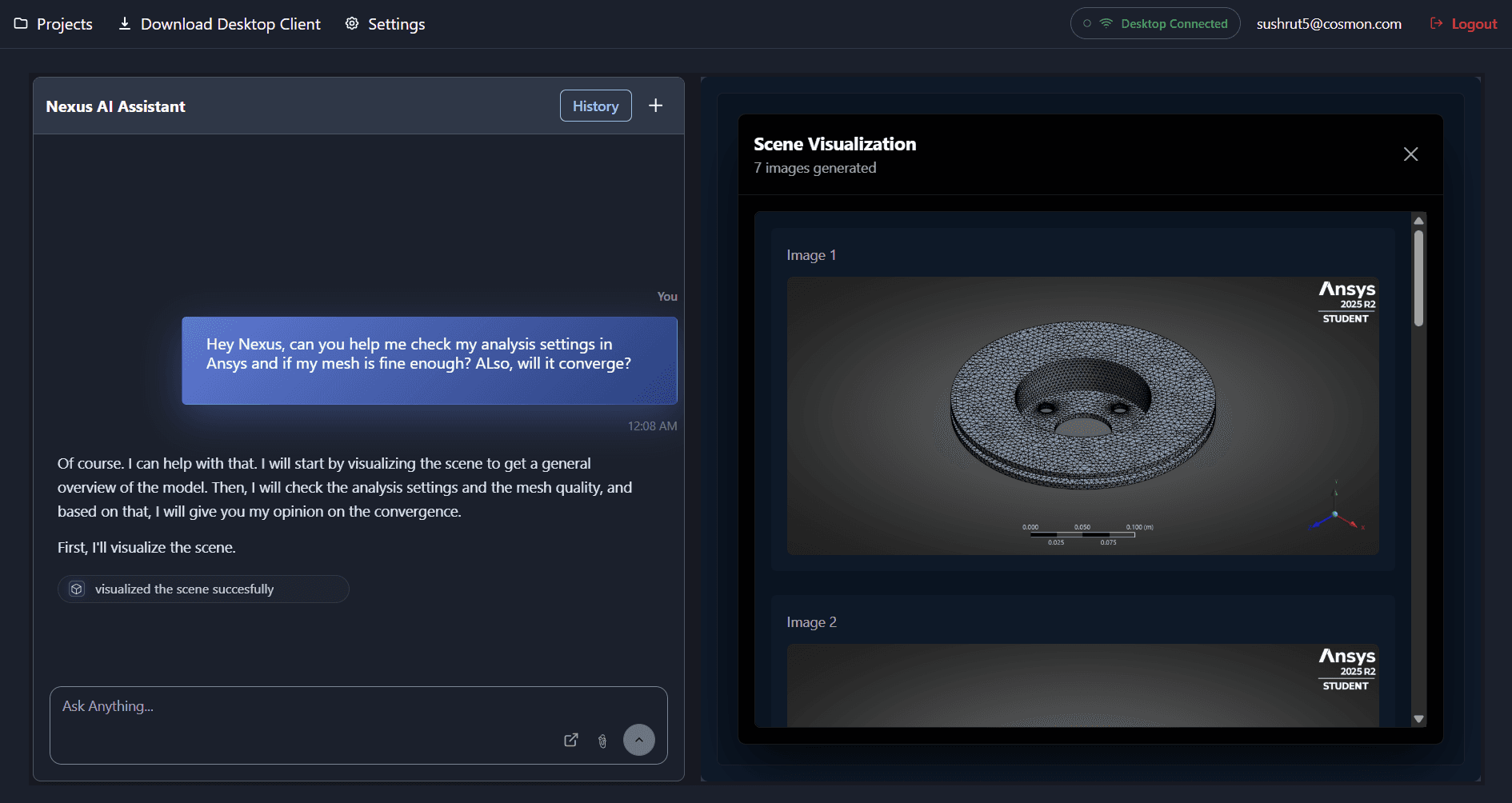
An AI agent, equipped with data analysis libraries (like Pandas/Matplotlib) and access to your simulation output files (e.g., .res, .h5, .rpc), can act as a real-time analyst. You can move from static reporting to interactive querying.
The Workflow:
Engineer: "Compare the lateral stiffness results from the latest simulation run against the physical K&C rig test data from the prototype. Highlight any areas with >5% deviation."
AI Agent: Ingests the simulation output and physical test CSV, aligns the datasets computationally, generates an overlay plot with deviation corridors, and provides a summary of where the model is too stiff or too compliant.
Why This Matters for Automotive Engineering
The automotive industry is shifting toward software-defined vehicles, and the engineering workflow must follow suit. By integrating AI agents into multibody simulation and K&C post-processing, we achieve three critical goals:
Data Continuity: Agents ensure that the data moving between CAD and CAE is consistent, reducing human error in model setup.
Faster Iteration: By automating the "setup and check" loop, engineers can explore more design variants in the same amount of time.
Deeper Insight: AI agents can surface correlations and anomalies in K&C data that a human eye might miss when scanning hundreds of plots.
We are actively building these capabilities to help engineers get back to what they do best: designing world-class vehicles.