


CASE STUDY · ENERGY
HIGH-TEMPERATURE
PEM FUEL CELL
Electrochemical multiphysics
with Nexus and COMSOL
Tools Nexus · COMSOL Multiphysics 6.3
Outcome Within 0.2% of published data · physics reasoned from scratch
PAGE 02
WHAT’S INSIDE
A walk-through of how Nexus set up and solved a fully coupled multiphysics model of a high-temperature proton exchange membrane (HT-PEM) fuel cell in COMSOL, and reproduced a published benchmark to within 0.2% at every point on the polarisation curve. See what Nexus reasoned beyond output, where it is fast and exact, and where the engineer’s judgment stayed essential.
Summary
A model validated to within 0.2% of a published benchmark, the physics reasoned from scratch by the agent.
P. 03
Problem
Three physics coupled at once, where a model can converge cleanly and still be physically wrong.
P. 03
Methodology
Seven domains, four species, and a five-step solver were proposed by Nexus and confirmed by the engineer.
P. 04
Validation & Results
Validating that the model holds up and is physically correct.
P. 05
Agent Design Input
How Nexus troubleshot a physically incorrect outcome, and where the engineer’s input was critical.
P. 06
Try Nexus
How to bring the same workflow to your own coupled electrochemistry and transport studies.
P. 07
Figure placeholder — add image
PAGE 03
SUMMARY
A fully coupled HT-PEM fuel-cell model, built and solved with Nexus, validated to within 0.2% of published scientific data across its full performance curve.
Nexus set up and solved a fully coupled 3D model of a high-temperature proton exchange membrane fuel cell in COMSOL. The agent applied electrochemistry, mass transport (a four-species Maxwell–Stefan model), and fluid flow physics to the simulation.
≤0.2%
Deviation from scientific benchmark
7
Coupled domains, one solve
0.013%
Max charge mismatch across the sweep
Deviation is measured against COMSOL’s published ht_pem benchmark across the full polarisation curve.
PROBLEM
A high-temperature PEM fuel cell is one of the most tightly coupled problems in engineering: the electrochemistry, the gas transport and the flow all depend on one another, so none can be solved on its own. Such a model is slow to solve, and a solution can converge but still be physically wrong.
01
Transport coupling limits the cathode
As current increases, the cathode’s oxygen demand rises, yet oxygen’s effective diffusivity through nitrogen and product water is far lower than hydrogen’s. The cathode reaches mass-transport limitation before the anode, and the coupled model must resolve this balance at every point on the polarisation curve.
02
Convergence is not validity
A coupled model can converge without crashes, solver errors or warnings and still produce results that are physically incorrect. Establishing that a solution is physically valid, and not merely numerically converged, is the substantive task.
+
Benefit to engineer
Nexus performed the simulation: seven domains, roughly thirty domain and boundary settings across three physics interfaces, and a five-step solver configuration, with every step logged for traceability. Nexus also supplies the physics reasoning behind the results, so the engineer can concentrate on validating the converged result.
PAGE 04
METHODOLOGY
The model is one repeating channel of the cell: seven stacked layers from anode to cathode, with a phosphoric-acid-doped PBI membrane operating at 180°C. The engineer’s first call was to build it in 3D rather than 2D, because current varies sideways across the rib — in-plane (X–Y) variation a 2D down-channel slice cannot produce. Before seeing any paper, Nexus proposed the physics from the engineering objective, and the engineer confirmed each call before the solve.
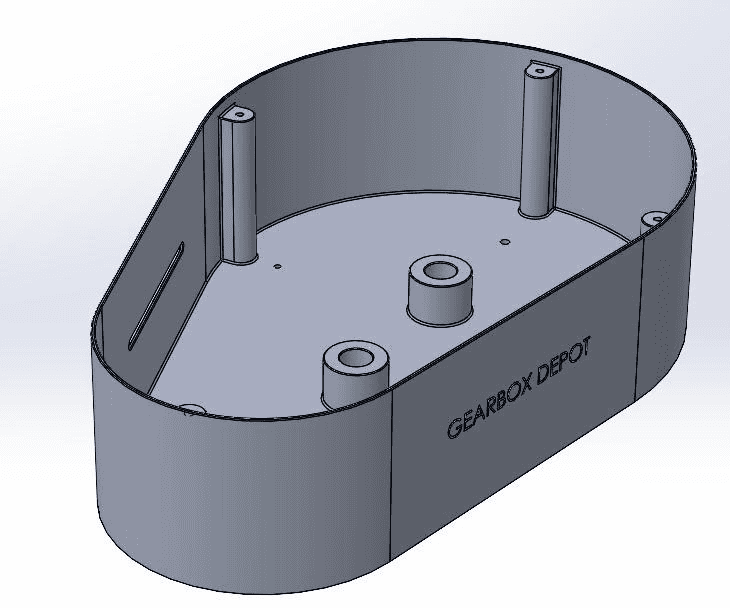
3D swept-hex production mesh · 17,696 elements · cathode CL 10 divisions · mapped mesh, X–Z cross-section
Model setup by domain
Nexus-proposed · engineer-confirmed
Setting
Value
Completed by
Physics interfaces
Hydrogen Fuel Cell (PEM), 7 stacked domains anode→cathode
Nexus
Species transport
Concentrated: H₂, O₂, H₂O, N₂
Nexus
Membrane conduction
Anhydrous (Grotthuss); no electro-osmotic swelling
Nexus
Flow
Free & Porous Media; Brinkman in GDL and electrodes
Nexus
Dimensionality
3D, for in-plane (X–Y) current across the rib
Engineer
Solver
Five-step staged, continuation 0.95 → 0.40 V, PARDISO
Nexus
Mesh & parameters
Benchmark values; per-layer graded, engineer-verified
Engineer + Nexus
PAGE 05
VALIDATION & RESULTS
Cell voltage (V)
Benchmark (A/cm²)
This model (A/cm²)
Deviation
0.95
0.00160
0.00160
0.00%
0.80
0.05043
0.05040
0.06%
0.70
0.20203
0.20181
0.11%
0.60
0.44154
0.44095
0.13%
0.50
0.72223
0.72134
0.12%
0.40
1.00392
1.00343
0.05%
Charge balance
—
0.013%
Max mismatch across the sweep
Nexus re-solved COMSOL’s published ht_pem benchmark (Ubong, Shi & Wang, 2009) to 0.00% before measuring its own coupled model against it.

Cathode starves first

Water pools at the cathode
3D ionic current across the rib

Transport is genuinely live
PAGE 06
AGENT DESIGN INPUT
This build tested Nexus’s reasoning as much as its output. Nexus held the physics that stood up against a published benchmark, while the simulation carried configuration errors that passed every clean solve. Nexus surfaced several errors and the engineer surfaced the rest. Here is the honest read.
+
Takeaway
The agent built its model first, independently from the physics description, without looking at how the benchmark was constructed. That model ran cleanly but came out ~38× too high at open-circuit voltage. Nexus noticed the tell: cathode oxygen concentration at 1.5× the benchmark’s for the same mole fraction and pressure, applied the ideal gas law to back out a model temperature near 300 K instead of 453 K, and traced the fault to gas properties evaluated at room temperature — one missing shared-temperature input. Nexus reached that from the result data alone.
Extending the validated model
Next study
What it adds
Nexus effort
Thermal coupling
Non-isothermal cell behaviour
Minutes to re-run
Humidification sweep
Maps the shutdown-condensation boundary
Minutes to re-run
Transient cooldown
Acid-leaching risk over time
Minutes to re-run
+
Nexus flagged what others missed
A supplied expression added a constant to a temperature difference in kelvin — a dimensional error. Nexus caught it before building the simulation and, rather than silently substituting a fix, flagged it, entered the expression as instructed, and reported the result.
$
How Nexus read the physics
Before seeing the benchmark, Nexus identified the appropriate HT-PEM physics, ruled out the low-temperature machinery that does not apply, and proposed a continuation-in-voltage solver strategy structurally identical to the benchmark’s own.
→
Next steps and Nexus
The next step is to take the validated model off its single operating point: thermal coupling for a non-isothermal cell, a humidification sweep to map the shutdown-condensation boundary, and a transient cooldown for acid-leaching risk. The setup already exists, so Nexus re-runs each new condition in minutes rather than rebuilding the study — turning one validated result into a simulation that explores the cell’s full operating envelope.
Think through > click through.
Let Nexus handle the rest.
Your AI Agent for Engineering Workflows
www.cosmon.com